
Galaxies and black holes
The Galactic centre
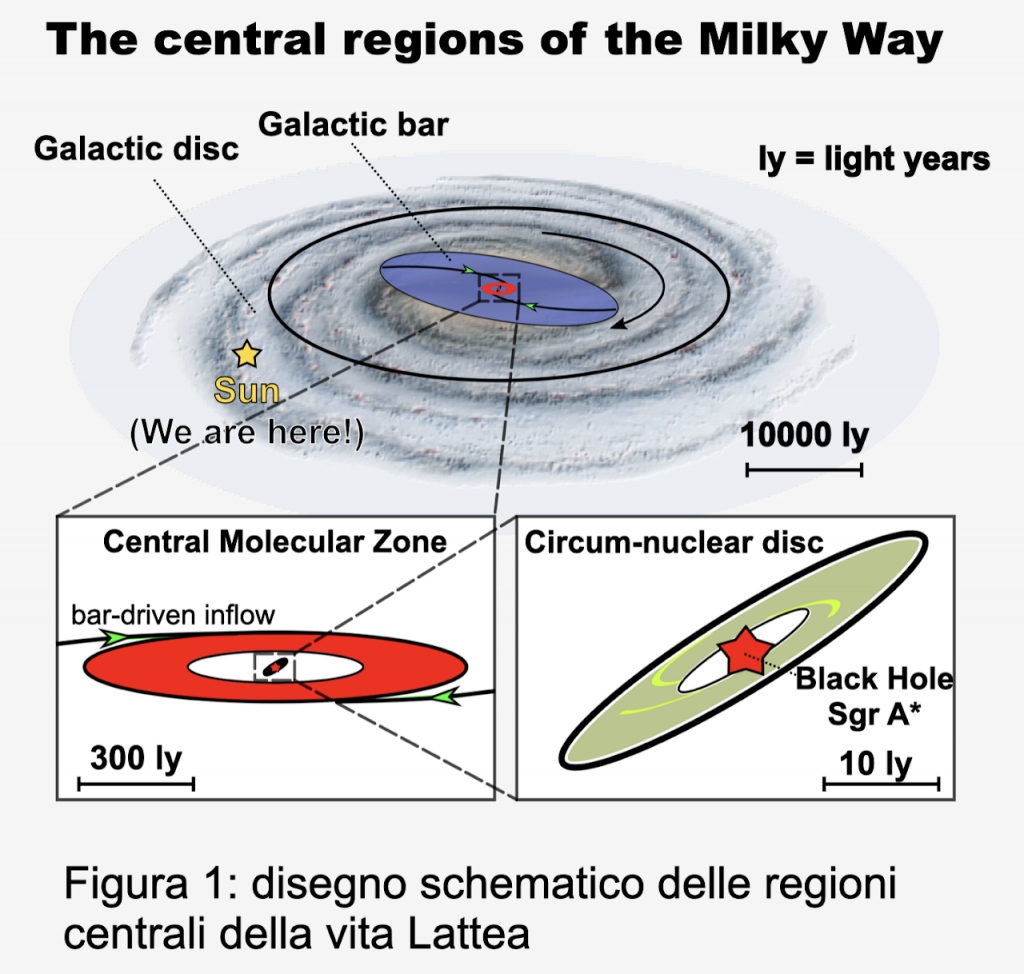
Understanding how gas is transported to the centre of galaxies is of one of the most important unsolved problems in modern astrophysics. Gas accreting onto supermassive black holes that sit at the centres of galaxies fuels the most powerful engines in the universe, Active Galactic Nuclei, shaping the formation and evolution of their host galaxies. Yet, we have a poor understanding of how the gas is transported from thousands of light years away to the sphere of influence of the central black holes.
The Milky Way centre is a hundred times closer than Andromeda and can be studied in much greater detail than any other galactic centre. It is the only galactic nucleus in which we can observe the interstellar medium down to the scale of forming stars and study the kinematics of individual stars.
The ERC-funded project “GalFlow” (PI: Mattia Sormani) aims to use the Milky Way as a template to understand the inward mass transport in galaxies by combining state-of-the-art astronomical observations with new analytical and numerical models.
The 3D-Gal project, funded by the Cariplo Foundation, aims to construct a 3D map of the interstellar medium in the central 500 light years of the Milky Way.
Contact: Mattia Sormani (mattiacarlo.sormani@uninsubria.it)
Massive black holes
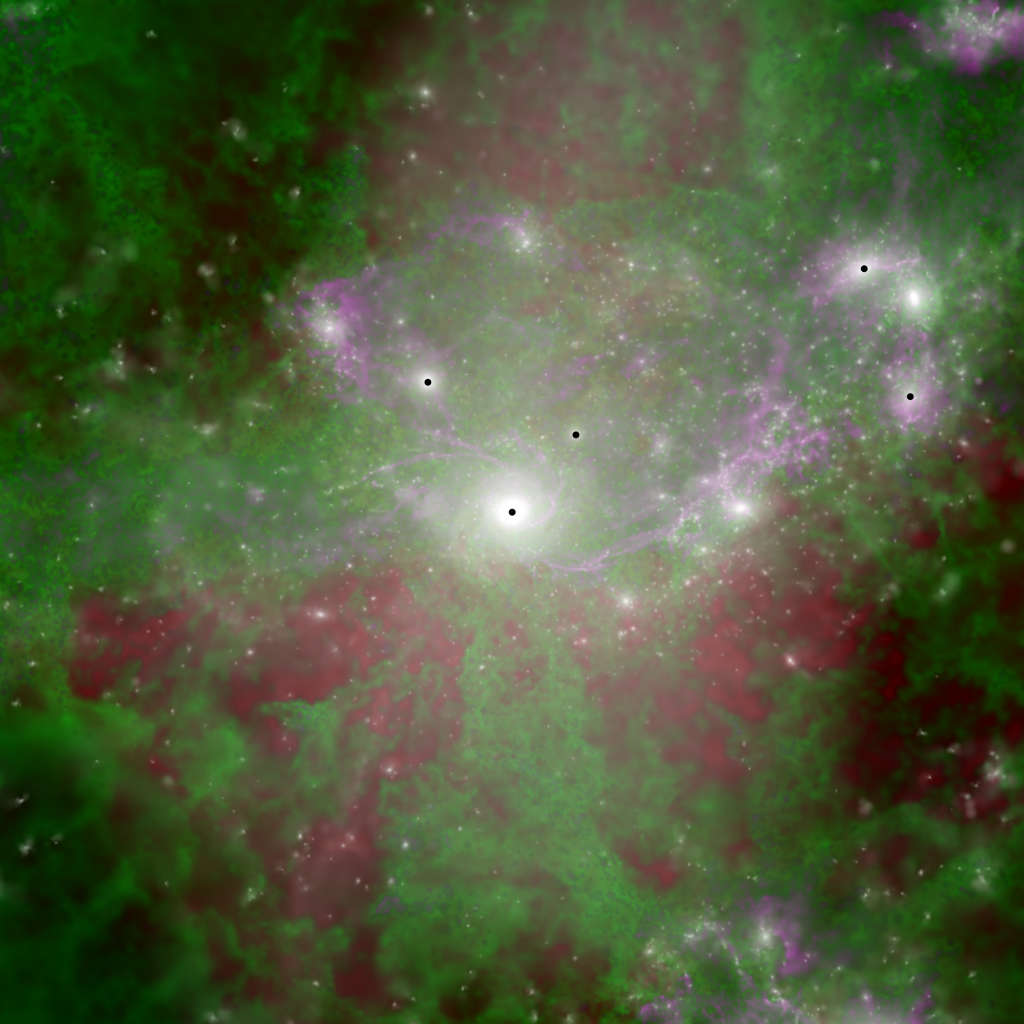
Black holes represent the most extreme and exotic objects in the Universe. Understanding how the massive ones hosted at the centre of almost all galaxies in the Universe is key to our understanding of the Universe.
Despite the decades-long effort by the community, we still do not know how they formed and grew to the observed masses, in particular because of our limited knowledge about how the galaxies they inhabit form and evolve.
At CLAP, we aim at shedding light at the physical processes responsible for black hole formation by means of semi-analytic models and cosmological hydrodynamic simulations, which we validate against observational data.
During galaxy mergers, black holes drift to the centre of the merger remnant, pairing in a binary which is expected to shrink and finally coalesce. This extreme event is responsible for the release of gravitational waves, that will be detected by LISA and Einstein Telescope. An assessment of how fast binaries merger and the potential electromagnetic emission associated to these events is crucial, and can only be obtained by means of dedicated numerical simulations, ideally ranging from pc-scale down to the event horizon.
Contact: Alessandro Lupi (alessandro.lupi@uninsubria.it)
Astrochemistry
The primordial Universe was extremely different from our local neighbourhood, with Hydrogen and Helium being the only (more or less) elements available. At later times, heavier elements were produced and released into the interstellar medium by stars, enriching the Universe to a high degree of complexity which is at the origin of life on Earth.
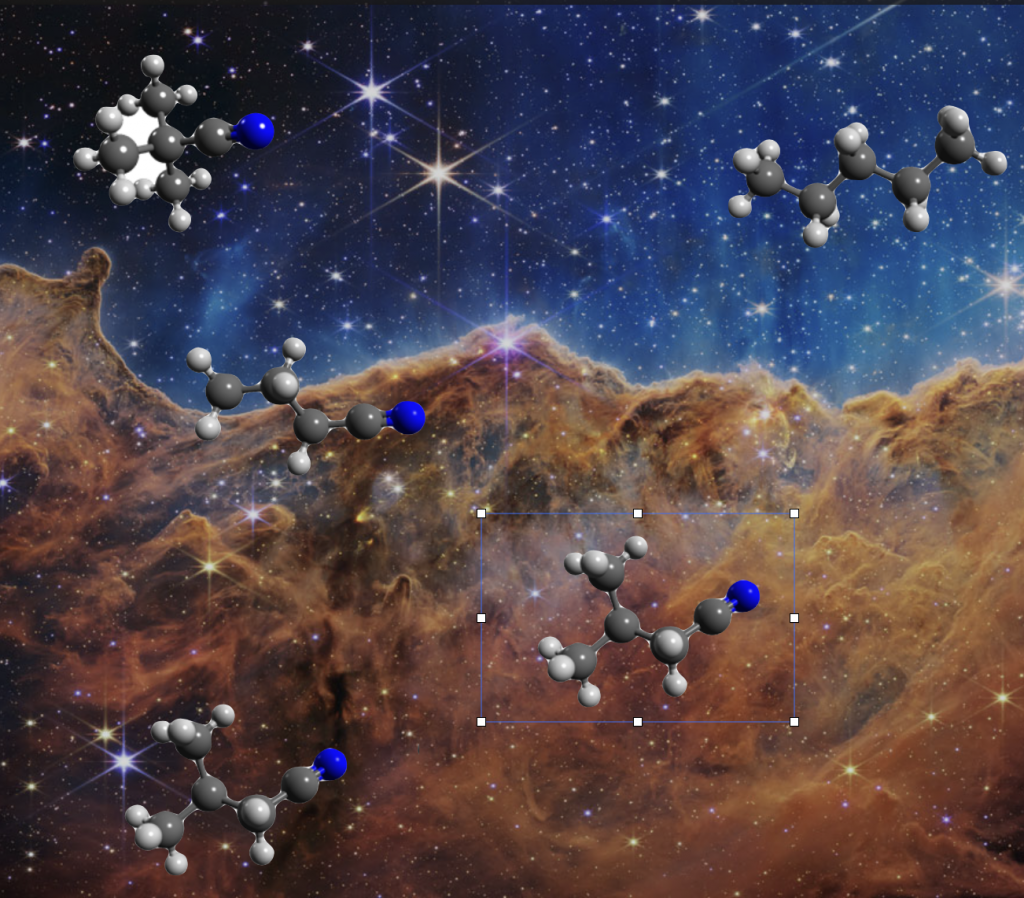
Observations of star-forming regions in our Galaxy hint at the presence of complex molecules that affect how planets form around stars, and life on them. Understanding how these molecules are created and transported on smaller and smaller scales is fundamental for our quest of the origin of life.
Given the challenging nature of this problem, which involves knowledge of both chemistry and astrophysics, and how they couple together, numerical simulations represent the only viable way to move forward our understanding.
At CLAP, we push forward this field by combining state-of-the-art hydrodynamical simulations with on-the-fly chemistry, from molecular cloud scales down to the planetary scales.
Contact: Alessandro Lupi (alessandro.lupi@uninsubria.it)
Exoplanets
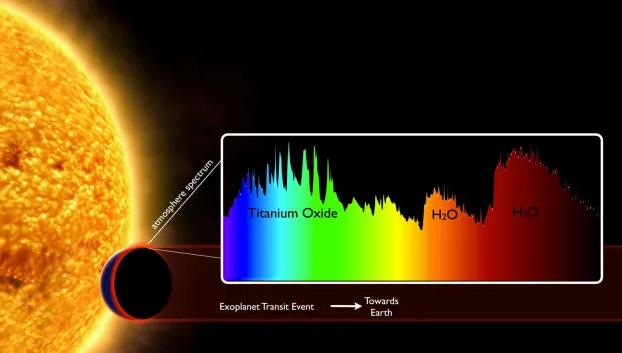
The characterisation of exoplanetary atmospheres is today one of the hottest topics in astrophysics. Close-in exoplanets are among the most interesting targets, sculpted by atmospheric escape driven by the X-ray/UV flux of their host stars. As of today, high-resolution (HR,R>50000) transmission spectroscopy (i.e., spectral time-series obtained while a planet, as seen from Earth, transits in front of its host star) is the ultimate technique to investigate exoplanetary atmospheres, and to study their chemical and physical properties.
Parallel to observations, modeling of exoplanet atmospheres is becoming successful, towed by the observations and recently able to predict the first detection of OI. The use of numerical hydrodynamic radiation codes is today an essential tool able to study the complex physic of exoplantary atmospheres.
At CLAP, we investigate the interaction between stellar radiation and planetary atmospheres from both a theoretical and observational perspective. Theoretically, we employ hydrodynamic simulations to model these interactions in different contexts, while observationally, we leverage our close collaboration with INAF to analyze and interpret high-resolution spectroscopic data.
Contact: Francesco Haardt (francesco.haardt@uninsubria.it)
Cosmology
Cosmology today can be resumed as the quest for understanding what dark matter (DM) and dark energy (DE) are. Both these open problems have superpositions with many different fields of physics, thereby making them appealing to the whole scientific community.
DM is what scientists refer to as the cause of an extra gravitational pull needed to explain various observations ranging from the galactic scales (few kpc) to the cosmological ones (hundreds of Mpc). The standard explanation for DM is a new fundamental particle, or perhaps more, not belonging to the Standard Model. Up to now, no evidence for these new particles has been found despite the enormous effort spent for their detection, most notably through ground-based and satellite-borne experiments. Primordial Black Holes are another promising candidate to the role of DM. At CLAP we explore theoretical alternatives to the role of DM.
As for DE, the recently discovered accelerated expansion of our universe has raised a quest to understand its cause. It could be a new form of energy, or it could be a different behaviour of the gravitational interaction on the largest scales, passing from being attractive to being repulsive. The cosmological constant has been for a long time our best model for DE, being both simple and in the best agreement with observation. However, its constancy has always posed a problem, known as the cosmological constant problem, and recent observational results from the Dark Energy Spectroscopic Instrument (DESI) seem to prefer a dynamical DE. At CLAP we investigate candidates to the role of DE, within the realm of the modifications of the gravitational theory on large scales.
A recent hot topic in cosmology is the so-called Hubble tension, that is the discrepancy between the measurement of the Hubble constant from local probes and the value inferred from CMB data. At CLAP we look for solutions of this tensions and other troublesome tensions in cosmology.
Contact: Oliver F. Piattella (of.piattella@uninsubria.it)
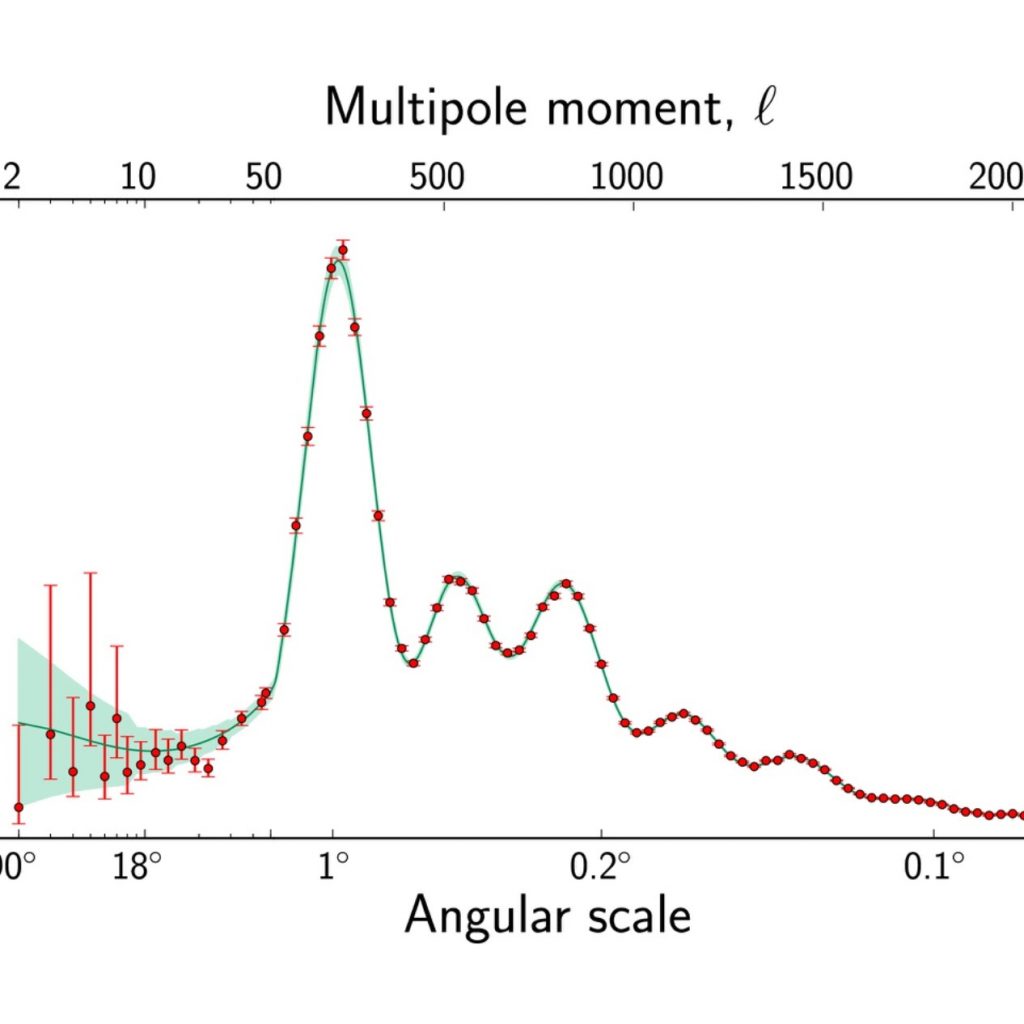
Credit: ESA and the Planck Collaboration.